
The fastest way to make friends abroad is to join something that puts you with the same people every day. Think an exchange, a course, a camp or a club. Pin My Map is a private map of where your friends live, have been and are going next. It is how you keep those friends once everyone goes home.
Friendships at school or at a first job happen for the same reason. You see the same faces again and again, without planning to. A week of solo sightseeing has none of that. The options below do.
Programmes that do the organising for you
An institution, school or company gathers a group and gives you a shared schedule. You never have to invent a reason to see people tomorrow.
- Erasmus+ study and traineeships: spend part of your degree, or a 2 to 12 month internship, in another country with an EU grant. Start at your university's international office.
- Erasmus+ youth exchanges: 13 to 30 year olds from several countries live together for 5 to 21 days. You join through a youth organisation, not on your own.
- Erasmus+ training courses: a few days to two weeks of training for youth workers and NGO volunteers. The SALTO European Training Calendar lists what is open.
- European Solidarity Corps: volunteer abroad for two weeks to 12 months if you are 18 to 30. Travel, housing, food and pocket money are covered.
- DiscoverEU: if you are 18 and live in the EU, apply for a free rail pass of up to 30 days.
- Erasmus for Young Entrepreneurs: work for 1 to 6 months beside an experienced founder in another country, with a monthly EU grant.
- Language schools such as EF: courses from 2 to 52 weeks, where everyone is new in town and coffee after class is an easy invitation.
- Group trips: one or two weeks with a small group. Pick one with a shared challenge, like a trek or a sail, because effort bonds people fast.
- Work exchange on Workaway or Worldpackers: help a host for a few hours a day in return for a bed. A hostel or surf house gives you a new crew every week.
Tip: search Facebook for "Youth Opportunities" plus your country. These groups share exchanges and courses from all over Europe, often days before the deadline.
Let a hobby do the introductions
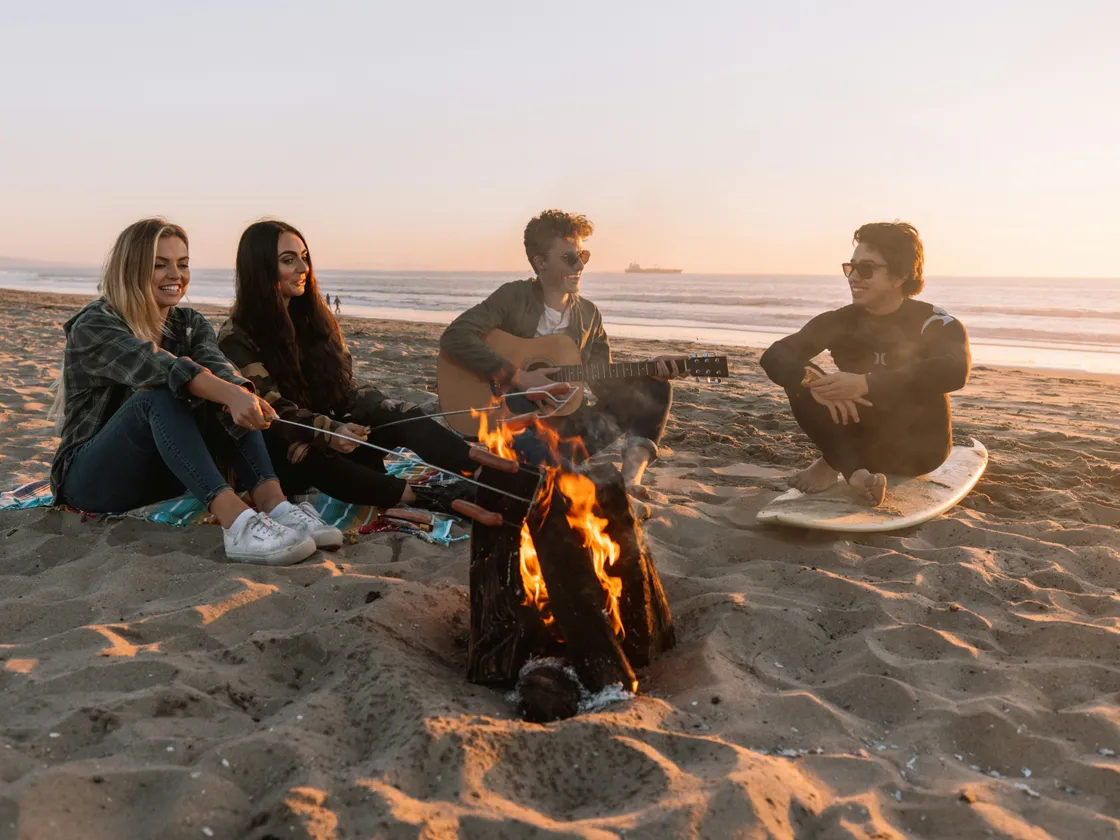
When a trip is built around something you love, everyone there already shares it. The small talk is done before you arrive, and the hobby gives you a reason to meet again.
- A surf camp in Portugal, Bali or Lombok, with shared houses and group lessons.
- A 200-hour yoga teacher training in Thailand, living with the same group for three to four weeks.
- A sailing flotilla in Croatia or Greece, where the boats meet up every evening.
- Climbing in Kalymnos or Railay, or a kite camp in Tarifa.
- Salsa in Colombia, tango in Buenos Aires, or a cooking school in Chiang Mai or Bologna.
- A 10-day Vipassana course. Nine days of silence, then some of the deepest conversations of your trip.
Closer to home, look for international niche clubs: run clubs, book clubs, matcha clubs, supper clubs and founder clubs. Find them on Meetup, Eventbrite and Instagram. Join one at home, then look for the same club in every city you visit.
One more thing nobody tells you: the first door opens the others. Online, it can look like only one club, school or community does exactly what you want, with exactly the right spirit. Once you are in, you find out there are many more. Everyone swaps the names of the clubs, courses and communities they loved. Click with someone, and you will soon hear "You should come to this one too. I'll be there, and it's all about that thing you love."
Which one fits your time?
- A weekend to a week: a niche club, a group trip, a language exchange evening or a short training course.
- Two to four weeks: a youth exchange, a surf camp, a yoga training or DiscoverEU.
- One to twelve months: Erasmus+, the European Solidarity Corps, Erasmus for Young Entrepreneurs, a language school or work exchange.
How to keep the friends you make abroad
Meeting people abroad is the easy part. Keeping them is where most of us drop the ball.
Say yes in week one
Groups form in the first few days. Skip the nap and go to the welcome drinks.
Be the organiser once
Suggest the dinner or start the group chat. The person who makes the plan becomes the glue.
Plan the reunion before you leave
"Lisbon next spring" happens far more often when you agree a rough month on the last night.
Add each other on Pin My Map
Swap more than handles. On Pin My Map you see each friend's home base and future trips, so you know who is going where next.
Go and visit them
A friend abroad is your best reason to travel again. Ask for their recommendations, or let them be your local guide.
Pin your people
Every one of these experiences ends the same way. A last night, a round of hugs, and a group chat that slowly goes quiet. The friendships do not fade because people stop caring. They fade because you lose track of who is where.
Pin My Map fixes that part. Pin your home base, past trips, future trips and wishlist, and see the same for your friends on one map. If you are heading to Bali, Pin My Map shows you that your surf-camp friend is already there. Pin My Map can also tell you when a friend is coming to your city.
There is no GPS and no tracking. Pin My Map only shows the cities and months you choose to share, and tags let you decide who sees what.
Frequently asked questions
What is the easiest way to make friends abroad?
Join something with a shared schedule, like an exchange, a course, a camp or a club. Seeing the same people every day turns strangers into friends faster than travelling alone.
Are there free programmes for meeting people abroad?
Yes. Erasmus+ youth exchanges and training courses are largely covered by EU grants. The European Solidarity Corps covers travel, housing and food, and DiscoverEU gives 18 year olds a free rail pass.
How do I stay in touch with friends I made abroad?
Agree a rough plan to meet again before you leave, then add each other on Pin My Map. Pin My Map shows where each friend lives and travels, so you notice when you are in the same place.